Central Station
Heart of DarknessCentral Station is a remote Company outpost whose neglected condition and confused priorities turn it into a study in colonial mismanagement. Situated beside a backwater and hemmed in by scrub and forest, it is the place where Charles Marlow finds his steamer sunk, begins the long work of salvaging and repairing it, and witnesses a system that can move men and trade goods inland while failing to deliver the simple materials his work requires.
Setting and First Impressions
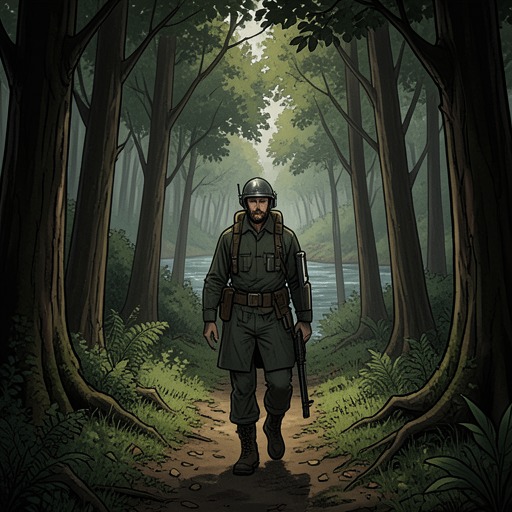
Charles Marlow reaches Central Station on the fifteenth day of his overland journey, after coming back into sight of the great river. The station occupies a backwater bordered by scrub and forest. Mud fronts one side; a poor fence of rushes encloses the other three, and a neglected gap serves as its entrance. The makeshift boundary offers little sense of order or security. White men carrying long staves emerge from among the buildings, approach to look at the newcomer, and then disappear again.
The outpost’s appearance gives physical form to its administrative disorder. When Marlow asks what is happening, a stout, agitated employee announces that his steamer is at the bottom of the river, then insists that everything is in order and directs him to the General Manager. Marlow initially sees the wreck as an infuriating practical problem, not as evidence of a wider pattern. Only later does he wonder whether the accident was entirely natural, while admitting that he cannot be certain.
The Wreck and the Work of Repair
The steamer had gone upriver two days before Marlow’s arrival, carrying the General Manager under a volunteer skipper. Less than three hours into the trip, it struck stones near the south bank, tore open its bottom, and sank. Marlow has to begin recovering his command the next day. Salvaging the vessel and repairing it after bringing its pieces back to the station take months, delaying his onward journey.
The wreck establishes a central contradiction of life at the outpost: Marlow’s work depends on basic equipment, but the station’s supply system does not provide it. Cases of rivets exist at the coast, and loose rivets lie around the station yard and even in the Grove of Death, yet none are available where the damaged steamer needs them. The station has suitable plates but nothing with which to fasten them. Trade caravans arrive repeatedly with manufactured goods, including cheap cloth and beads, while a small number of carriers could have brought the rivets needed to restore the boat. The obstacle is not simply distance or scarcity; it is a failure to direct available transport toward necessary work.
Administration and the Station’s Priorities
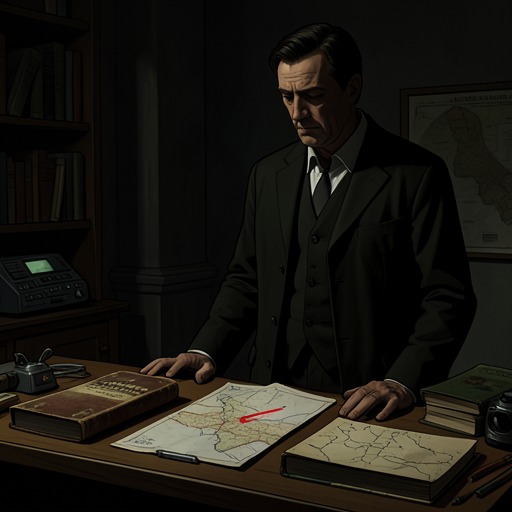
The General Manager greets Marlow with urgent talk about delays and the need to relieve upriver stations. He is especially anxious about Kurtz, the chief of an important station, who is reportedly ill. He calls Kurtz the Company’s best agent and an exceptional figure of great importance, yet the Manager’s immediate concern does not translate into practical help for Marlow. When Marlow estimates that repairing the steamer will take months, the Manager calmly proposes three months as a workable schedule. Marlow first dismisses this as empty talk, then recognizes the accuracy of the estimate.
Marlow regards the Manager as an ordinary trader whose authority inspires uneasiness rather than affection, fear, or respect. He sees little talent for organization or initiative in him, and the disorder of Central Station appears to confirm that judgment. At the same time, the Manager can keep routine going and seems difficult to unsettle. His composure stands against the station’s visible confusion: men drift about with long staves, while talk of Ivory circulates as if it were a shared devotion. Marlow reads the contrast between that fixation and the silent wilderness beyond the station as a sign of the Company’s precarious presence.
Cargo, Rivets, and the Expedition
While Marlow works on the wreck, the expected rivets do not arrive. Instead, over three weeks, five installments of the Eldorado Exploring Expedition reach the station. Each group comes with a white leader on a donkey, followed by footsore carriers and a clutter of tents, camp-stools, boxes, and bales. The arrivals add to the station’s confusion rather than supplying what Marlow needs. Their equipment, brought inland in disorder, makes the expedition look less like a purposeful undertaking than an ill-managed load of goods.
The expedition’s stated enterprise is, in Marlow’s judgment, a cover for greed: its members want treasure from the land without any serious moral purpose. The General Manager’s uncle leads the group and spends his time in close conversation with his nephew. Their presence sharpens the gap between what the station can transport and what it chooses to transport. Trade goods and an expedition’s provisions make the journey inland; the rivets needed to restore a working steamer do not. The failure has consequences beyond inconvenience: it prolongs Marlow’s repair work and keeps him at Central Station.
Kurtz and the Station’s Larger System
During the months of repair, Marlow gives occasional thought to Kurtz, though he says he is not yet very interested in him. What draws his curiosity is whether a man who came out with moral ideas can rise within this system, and what he will do when he reaches the top. That question acquires force when Marlow overhears the General Manager and his uncle discussing Kurtz. The conversation reveals that Kurtz had asked to be sent to an isolated station and had rejected the kind of assistant the administration could provide. It also reveals the Manager’s resentment of Kurtz’s influence and the irritation caused by the quantity of Ivory he sends back.
Central Station is therefore more than a stopping place in Marlow’s journey. Its wrecked steamer, useless abundance of trade goods, missing rivets, and preoccupation with Ivory expose a hierarchy in which commercial extraction outweighs practical competence. Its managers speak of urgency and caution, but the station’s operations repeatedly frustrate the work required to move upriver. Marlow’s long delay makes that dysfunction concrete: the route onward depends on repairs, and repairs depend on materials that are nearby in one sense but absent where they matter. Against the forest surrounding the outpost, Central Station appears both a functioning node of the Company’s trade and a fragile, badly ordered intrusion.